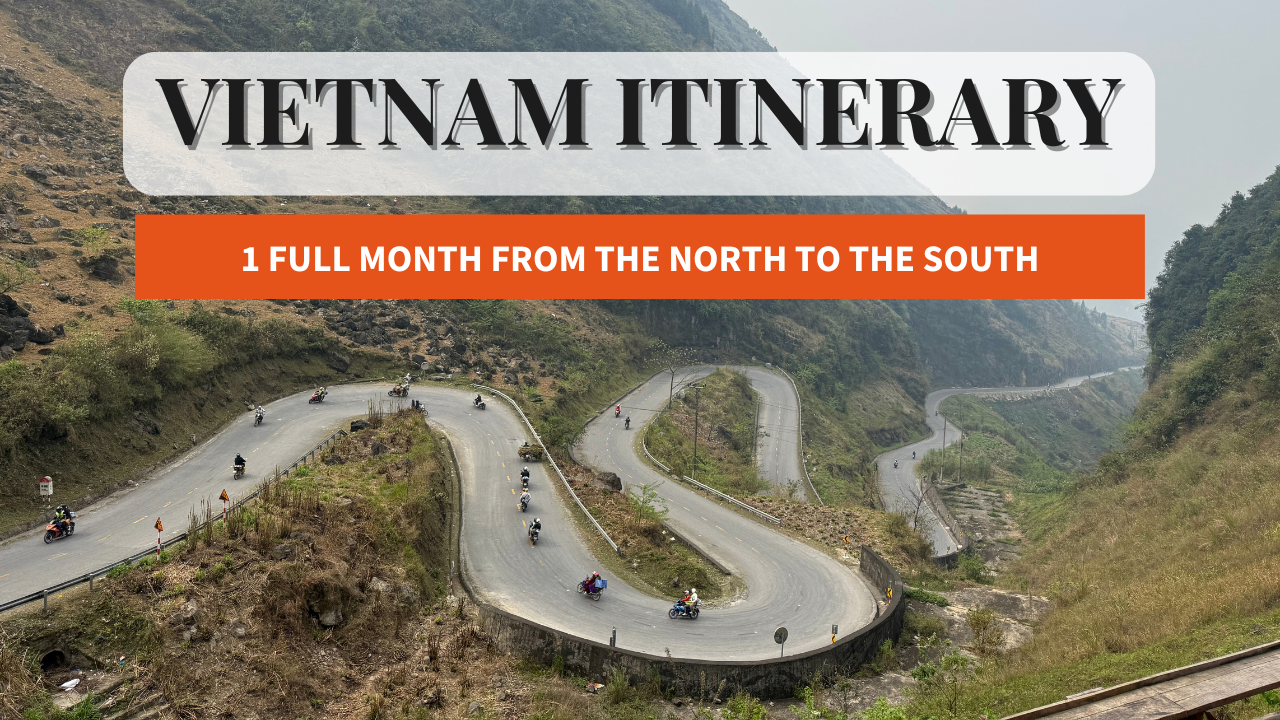
Vietnam is a country of breathtaking landscapes, bustling cities, and unforgettable adventures. Over the course of a month, I experienced the best of its north, central, and south regions. From jungle river boat journeys to epic food hunts, scenic loops, and serene towns, here’s our full story and itinerary.
March 13th: My Jungle Cruise and Arrival in Hanoi
I arrived in Hanoi by bus from Laos, after a long and scenic river journey through the jungle — a story for another post. Hanoi’s energy is electric, and it immediately felt alive with its motorbikes, street vendors, and endless aromas.
Activities & Recommendations:
Walking around Hoan Kiem Lake offers a peaceful pause before diving into Hanoi’s nonstop rhythm, bustle of the markets as the buzz of scooters
Wander through the Old Quarter, where narrow streets are filled with the sound of motorbikes weaving between vendors balancing bamboo baskets, shopkeepers calling out their goods, and the smell of grilled meats and herbs drifting from food stalls. Hanoi also has a beautiful mix of very old trees with hanging lanterns amongst the architecture that creates a unique vibe to walk around.
Pause at a tiny plastic stool café to sip strong Vietnamese coffee (more below), while life rushes past just inches away in the chaos of the city.
Local Street Foods:
Pho: Fragrant noodle soup with beef or chicken, best enjoyed at dawn. Try Pho Gia Truyen on Bat Dan Street.
Bun Cha: Grilled pork patties with noodles, fresh herbs, and dipping broth. Famously served at Bun Cha Huong Lien (where Obama and Bourdain dined).
Banh Mi: Crispy French baguette stuffed with meats, pickled veggies, and pate. Banh Mi 25 is a top spot. But Bự Bánh Mì was our top choice for a small hole in the wall with phenomenal taste.
Chè (Vietnamese dessert): a family of sweet soups, puddings, and drinks made from coconut milk, beans, jellies, and tropical fruits. Sinh tố Hoa Béo was our top spot!
Coffee to Try in Hanoi:
Egg Coffee (Cà Phê Trứng): Creamy, custard‑like foam over strong drip coffee. Best at Café Giảng, Café Đinh, or Café Minh.
Coconut Coffee (Cà Phê Cốt Dừa): Sweet and tropical, try it at Cộng Cà Phê.
Iced Milk Coffee (Cà Phê Sữa Đá): Bold and refreshing, found at any street stall.
Bac Xiu: Milkier, sweeter coffee, great if you want something light.
Note: We WILL be back to Hanoi for more recommendations after a quick trip east. Read on to learn about Hanoi's famous Train Street when we return.
March 15th–21st: Cat Ba & Ha Long Bay
We reached Cat Ba Island by bus and ferry, gliding past harbors before stepping onto the gateway of Ha Long Bay. The moment we arrived, the scenery felt cinematic — jagged limestone cliffs rose from emerald waters, promising days of adventure and discovery.
Highlights:
Scootering on Cat Ba Island to explore local villages (we rented from town).
Hiking Cat Ba National Park after scootering there, where we trekked through misty, lush green hills to several breathtaking viewpoints and encountered diverse flora and fauna.
We ventured into the vast caverns of Trung Trang Cave, winding through its cool chambers and dramatic limestone formations.
We took a day cruise around Cai Beo Fishing Village, gliding past clusters of floating houses, and even had the chance to steer the boat ourselves — a thrilling and scenic moment surrounded by limestone cliffs.
Returning to Hanoi, we made sure to enjoy the city’s food scene in depth.
Hanoi Food & Exploration Recommendations:
Train Street: Grab coffee while a train passes inches away. Travelers often balance little bottle caps on the tracks as quirky souvenirs — not officially allowed, but almost everyone does it.
Street Food Crawl: Bun cha, banh mi, egg coffee, and more.
Night Markets: Wander through endless rows of stalls where sizzling skewers, handmade crafts, and knock‑off sneakers all compete for your attention. The air is thick with the smell of grilled meats, neon lights glow overhead, and the energy of bargaining adds to the buzz of Hanoi’s vibrant market culture.
March 22nd–26th: Ha Giang Loop Adventure
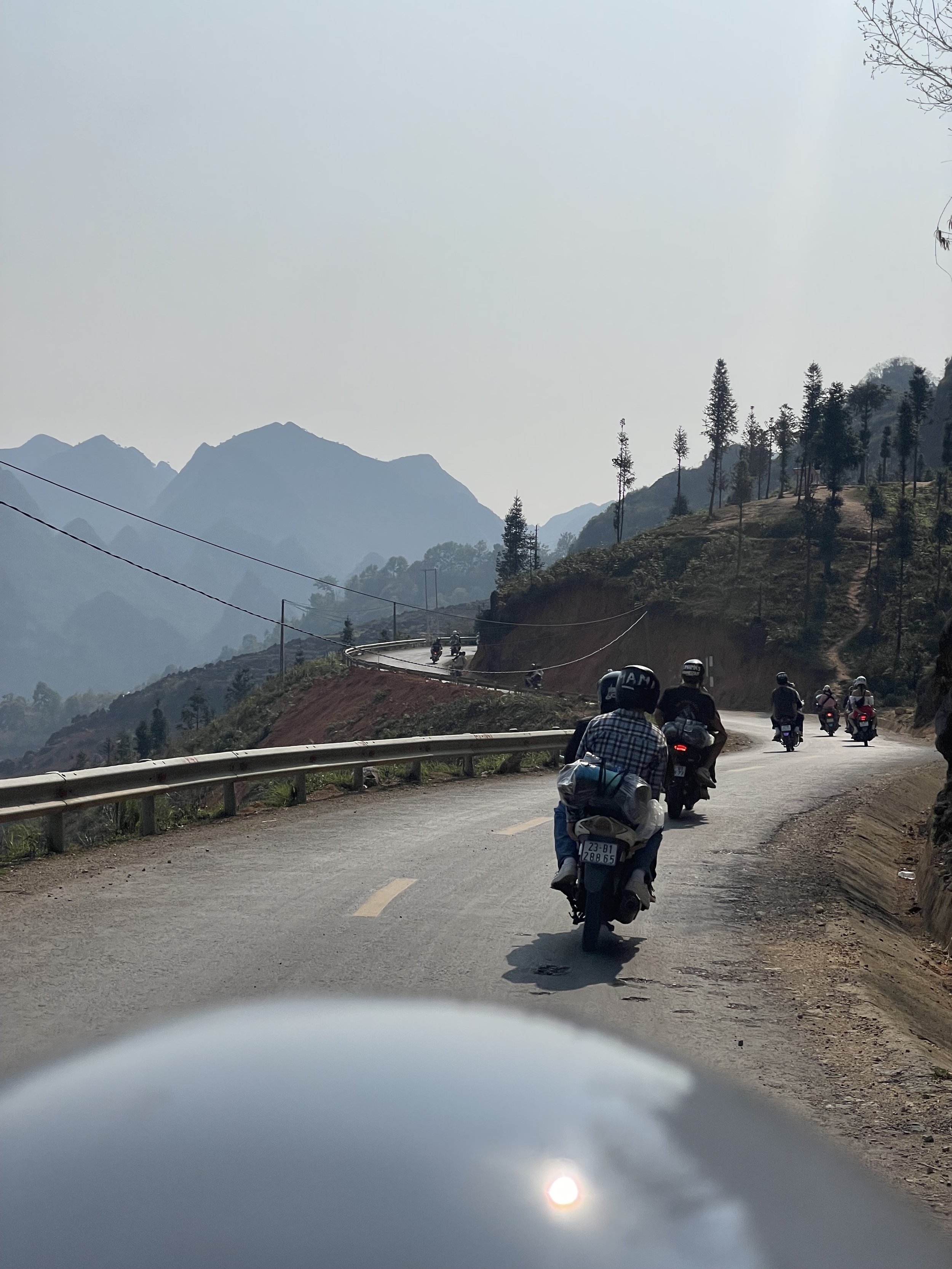
We chose Mama’s Homestay to guide us on the famous Ha Giang Loop, and stretched it into 4 days — the extra day is absolutely worth it. This motorbike journey carries you through jagged mountains, winding passes, and villages tucked into valleys. From the first rev of the engine you feel the wind in your face, every bump in the road beneath you, and the thrill of hairpin turns with sheer cliffs dropping into green rivers below. It’s a ride that makes you feel alive.
Day by Day:
Day 1 (Ha Giang → Yen Minh): Leaving town with our easyriders — local drivers who expertly handle the bikes — we quickly climbed into the mountains. The first day was about finding rhythm: rolling hills, pine forests, and the excitement of being on the road. That night we stayed in a family-run homestay, sharing rice wine and swapping stories with fellow travelers.
Day 2 (Yen Minh → Dong Van): The scenery grew wilder as we crossed the Dong Van Karst Plateau, its limestone peaks stretching endlessly. Narrow roads hugged cliffsides, and every corner revealed a new panorama. In Dong Van town, we explored the old quarter before gathering around the homestay table for dinner and more laughs (and shots) with our easyriders.
Day 3 (Dong Van → Meo Vac): The highlight — riding the legendary Ma Pi Leng Pass. Imagine leaning into switchbacks as clouds drift through deep canyons, the Nho Que River shimmering far below. The scale is overwhelming, equal parts exhilarating and humbling. We ended the night in Meo Vac, a small town where karaoke and rice wine with locals capped the day.
Day 4 (Meo Vac → Ha Giang): The road home felt bittersweet. We cruised through villages where children waved and shouted “Hello!” as we passed, the mountains slowly giving way to valleys. Back at Mama’s Homestay, we celebrated the loop with one final communal meal.
Notes & Tips:
Easyriders: These are experienced local drivers who know every bend of the loop. If you’re not confident driving yourself, riding pillion with an easyrider lets you focus on the scenery. Tipping isn’t required but a small gesture ($5–10 at the end) is warmly appreciated.
Highlights: Dong Van Karst Plateau, Ma Pi Leng Pass, endless mountain passes, village homestays, and sharing meals and rice wine under the stars.
Impact: This was the moment — the laughter, the challenges, and the raw beauty of northern Vietnam bonded our group deeply. The Ha Giang Loop left us exhilarated, reflective, and already dreaming of returning.
Cheers in Vietnam: When enjoying drinks with locals or easyriders, say "Mot, hai, ba, yo!" (pronounced: moht, hi, bah, yo) which means "One, two, three, cheers!". It’s the typical way to toast and join in the shared joy of the journey.
March 27th–29th: Da Nang & Reconnecting with Trung
After a brief return to Hanoi post-Ha Giang Loop, I traveled to Da Nang on March 29th to meet up with my good friend Trung. This leg of the trip spanned three to four days, and I made the most of it by renting a scooter to explore the city and its surroundings at our own pace.
Exploring Da Nang by Scooter:
Scootering around gave us the freedom to visit multiple spots in a day — from bustling neighborhoods to scenic coastal stretches. Feeling the wind on our faces while cruising past the Han River or along My Khe Beach made every ride an adventure. Each turn revealed new cafes, street food vendors, or viewpoints that are easy to miss when on foot.
Food Highlights in Da Nang:
Da Nang is famous for its central Vietnamese cuisine, which tends to be lighter and more herb-forward than other regions. Some must-try dishes include:
Mi Quang: Turmeric-yellow noodles with pork, shrimp, herbs, and crispy rice crackers, a Da Nang specialty.
Banh Xeo: Savory rice pancakes stuffed with shrimp, pork, and bean sprouts, often wrapped in fresh herbs
Bun Thit Nuong: Grilled pork with vermicelli noodles and fresh herbs, drizzled with nuoc cham.
Seafood: Being a coastal city, fresh seafood markets and seaside stalls are abundant — we particularly enjoyed grilled squid and clams.
Highlights & Experiences:
Marble Mountains: We scooted here to explore caves, pagodas, and panoramic views of the city and coast. This is also where I learned the Chinese character for heart: 心
Dragon Bridge: a central bridge in Da Nang where the support structure is shaped like a dragon snaking across the river. Observing the dragon's fire and water show at night from a nearby rooftop café was unforgettable.
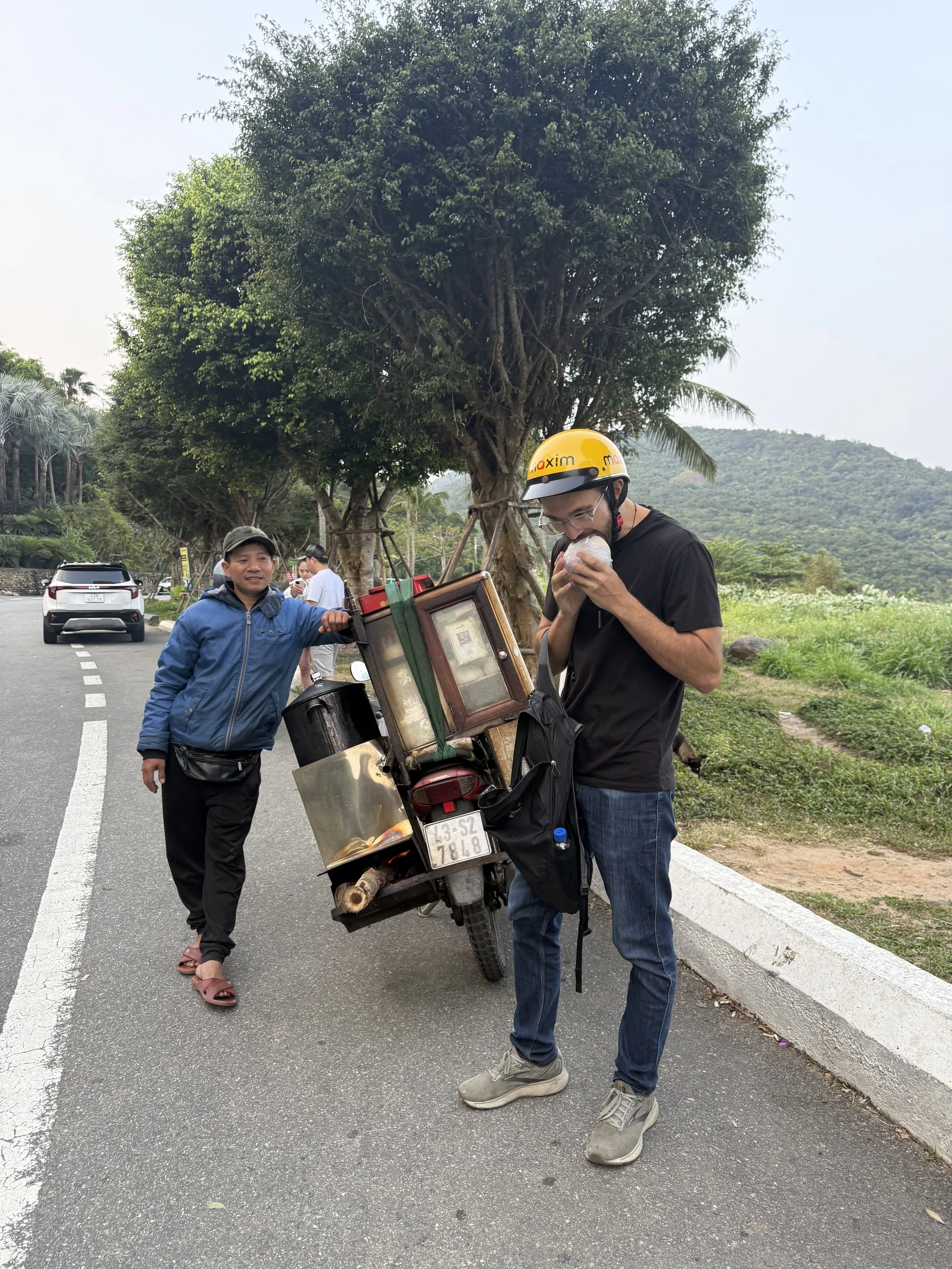
Son Tra Peninsula: We spent hours hiking and spotting the endangered red-shanked douc langurs, and saw dozens of playful monkeys. I even got chased after ordering a bao bun from the back of a bao scooter — just listen for them, they’re everywhere like ice cream trucks in America.
Local Drinks & Cafes: Stopping in small coffee shops or smoothie stalls while scootering around made the city feel intimate and lived-in.
Overall: This Da Nang trip was about reconnecting with Trung, savoring local flavors, and embracing the freedom that comes with a scooter — exploring hidden gems, scenic routes, and enjoying the city at our own pace. It was a lively, sensory-rich experience that blended friendship, food, and adventure seamlessly.
April 5th–April 10th: Hoi An Ancient Town
Arriving in Hoi A feels like stepping into a perfectly preserved living museum. This UNESCO World Heritage site is absolutely stunning, with its narrow streets lined by centuries-old merchant houses, “garlic clove shaped” lanterns hanging from every shop and boat glowing warmly along the riverside, and bustling street markets that awaken every sense.
Activities & Highlights:
Walking Tour of the Ancient Town: We joined a guided walking tour to learn about Hoi An’s rich history — from its days as a bustling trading port to the mix of Japanese, Chinese, and European influences reflected in architecture. Fun facts included the origins of the Japanese Covered Bridge and the secret codes hidden in old merchant houses.
Hoi A Loon Center Show: We attended the show at the Hoi A Loon Center, an exclusive performance only shown in Hoi An and Ho Chi Minh City. The spectacle combines insane acrobatics, music, and storytelling, providing a unique glimpse into local artistry.
Lantern-Lit Evenings: As dusk falls, lanterns illuminate every corner, casting reflections across the Thu Bon River. Walking through these streets, it feels like being inside a living painting — a moment both serene and magical.
Culinary Adventures: We indulged in Hoi An specialties like Cao Lau noodles, Banh Xeo, and various street snacks. Each bite tells a story of local flavors, with fresh herbs, perfectly grilled proteins, and regional noodles that differ subtly from the rest of Vietnam.
Scootering Through Countryside: Instead of cycling, we scooted through the lush green fields and rice paddies surrounding Tra Que Vegetable Village, learning about local farming practices and enjoying the freedom to explore farther and faster.
Tailor Shops & Souvenirs: Hoi An is world-famous for its tailoring. We explored a few shops and dreamed of returning to have a leather jacket or other unique pieces custom-made. This is a must-do experience for anyone visiting the town — seeing the craftsmanship and understanding the process is half the fun.
Why It Stands Out: Hoi An is one of my favorite spots in all of Vietnam. Every alley, every lantern, every riverside reflection invites you to slow down, take in the beauty, and feel the living history around you. From exclusive performances to the possibility of bespoke tailored pieces, every moment feels immersive, and it’s impossible not to fall in love with its charm and meticulous preservation.
April 10th–April 13th: Ho Chi Minh City (Saigon)
Ho Chi Minh City is a bustling, sprawling metropolis — it’s not my favorite spot in Vietnam, mainly because it’s the quintessential big city with all that entails: crowded streets, endless traffic, and the nonstop buzz of commerce. That said, there were highlights that made the visit memorable.
City Highlights:
Rooftop Views & Café Apartments: While the city can feel overwhelming, we found solace in a charming café apartment overlooking a lively plaza. From there, you could soak in the city’s energy at your own pace. The nearby big tower (the name escapes me) also provided an impressive skyline view and a sense of scale for the urban landscape.
War Remnants Museum: The most profound experience was visiting the War Remnants Museum. As an American, it was both intense and heartbreaking. The exhibits detailing war crimes, civilian suffering, and the enduring impact of the Vietnam War left a deep impression. I was struck by how this conflict is just one chapter in Vietnam’s long history of foreign oppression — including periods under French and Chinese rule — and yet, speaking to locals, there’s little lingering resentment focused solely on the American war. Experiencing this perspective was enlightening and humbling.
Big City Experiences: Expect typical metropolitan encounters: bustling markets like Ben Thanh, street food vendors, cafés tucked into alleys, and the constant hum of scooters and cars. Architecture reflects both colonial history and modern growth, giving the city a layered, energetic feel.
Impact: Ho Chi Minh City is intense, but the War Remnants Museum, the reflective café moments, and glimpses of the city from above offered meaningful insights. While it’s not my favorite city in Vietnam, it provides a raw, authentic urban experience and a chance to confront history from a Vietnamese perspective.
Tips & Insights for a Month in Vietnam
Spending a full month in Vietnam allowed us to experience a rich variety of landscapes, cities, and cultural highlights. Here are some key takeaways for anyone planning a similar journey:
Transportation: Grab, local buses, trains, and ferries are convenient options. For short-term mobility in cities, renting a scooter or bike can make exploring neighborhoods and countryside easier.
Packing: Lightweight, breathable clothing works well for the south and central regions, while layers and a light rain jacket are essential for northern mountains. Comfortable walking shoes are a must.
Money & Payments: Cash is widely used, though cards are accepted in larger establishments. ATMs are plentiful in cities, but in rural areas, always have some cash on hand.
Connectivity: Purchase a local SIM card or eSIM for reliable internet, maps, and navigation.
Food Adventures: Street food is part of the experience — try local specialties at each region and follow where the locals go. Rule of thumb: if there is a crowd of locals, just go there and eat what they eat. Give it a try and explore!
Cultural Respect: Engage with local communities, be mindful of customs, and always ask before taking photos of people.
Health & Safety: Stay hydrated, protect yourself from the sun, and always wear helmets on scooters. Grab scooters will typically give you a helmet but not always. Travel insurance is recommended. Scooters are the #1 cause of injury to foreigners (see my funny post on Insta) but this is mainly due to insufficient experience of the foreign drivers. Local drivers weave around you at zebra crossing with absolute ease. Try it! With caution of course.
Flexibility & Openness: Part of Vietnam’s magic comes from spontaneous detours, local recommendations, and unexpected discoveries — embrace them.
Vietnam offers something for every type of traveler: stunning landscapes in the north, historical charm in central towns, and the urban bustle of the south. A month gives you the time to pace yourself, soak in each experience, and create lasting memories. For us, it wasn’t just about the sights and flavors, it was about sharing them together. Traveling side by side through rice fields, night markets, and winding mountain passes made every moment feel richer. In the end, Vietnam gave us more than a journey; it gave us a deeper bond, woven through each adventure.
Coming Soon: Full city guides with detailed maps, top restaurants, hidden gems, and in-depth tips from our own experiences — stay tuned!
More Stories & Travel Tips Here